Brand Voice vs Tone of Voice: The Difference Most Marketers Get Wrong
TLDR
Brand voice is who you are when you write. Tone of voice is how you sound in a specific moment. Confusing the two is the reason AI-generated copy reads like it belongs to nobody — and the reason most brand voice guidelines fail to keep teams consistent.
Brand voice and tone of voice get used interchangeably in slide decks, style guides, and AI prompts. They are not the same thing.
The difference matters because the two operate on different timescales. Voice is fixed. Tone moves. When a copywriter or an AI tool collapses them into one input, the output reads like every other piece of corporate writing on the internet.
This post draws the line between them, shows you how to define each one for a brand, and explains why this single distinction is the reason most AI-rewritten copy still misses.
What brand voice actually is
Brand voice is the personality that runs through everything you write. It does not change between an Instagram caption and a 60-page whitepaper.
Mailchimp uses the same voice in a tooltip as it does in a customer success story — direct, friendly, allergic to jargon. Patagonia sounds the same in a press release as it does on a hangtag. Voice is identity.
A useful test: if you stripped the logo from a piece of copy and showed it to someone in your audience, could they name the brand? If yes, the voice is doing its job. If no, you have a voice problem, not a content problem.
What tone of voice actually is
Tone is voice in context. Same identity, different register.
A SaaS company with a confident, witty voice will still use a different tone when writing a 404 page versus a customer churn email. The 404 might lean playful. The churn email needs to be respectful, slightly serious, no jokes. Voice did not change — tone adjusted to fit the situation.
The classic analogy from Mailchimp's style guide still holds up: you have one voice all the time, but your tone shifts depending on who you are talking to and what they need from you right now.
Why this distinction breaks down with AI tools
Most AI writing tools ask for "your brand voice" in a single text field. That field is being asked to capture two completely different things — your fixed identity and your situational adjustments. It cannot.
What you get back is averaged. The output sounds professional-friendly-helpful-clear because that is the safest blend of every voice and every tone the model has ever seen. It is recognizably AI for exactly this reason.
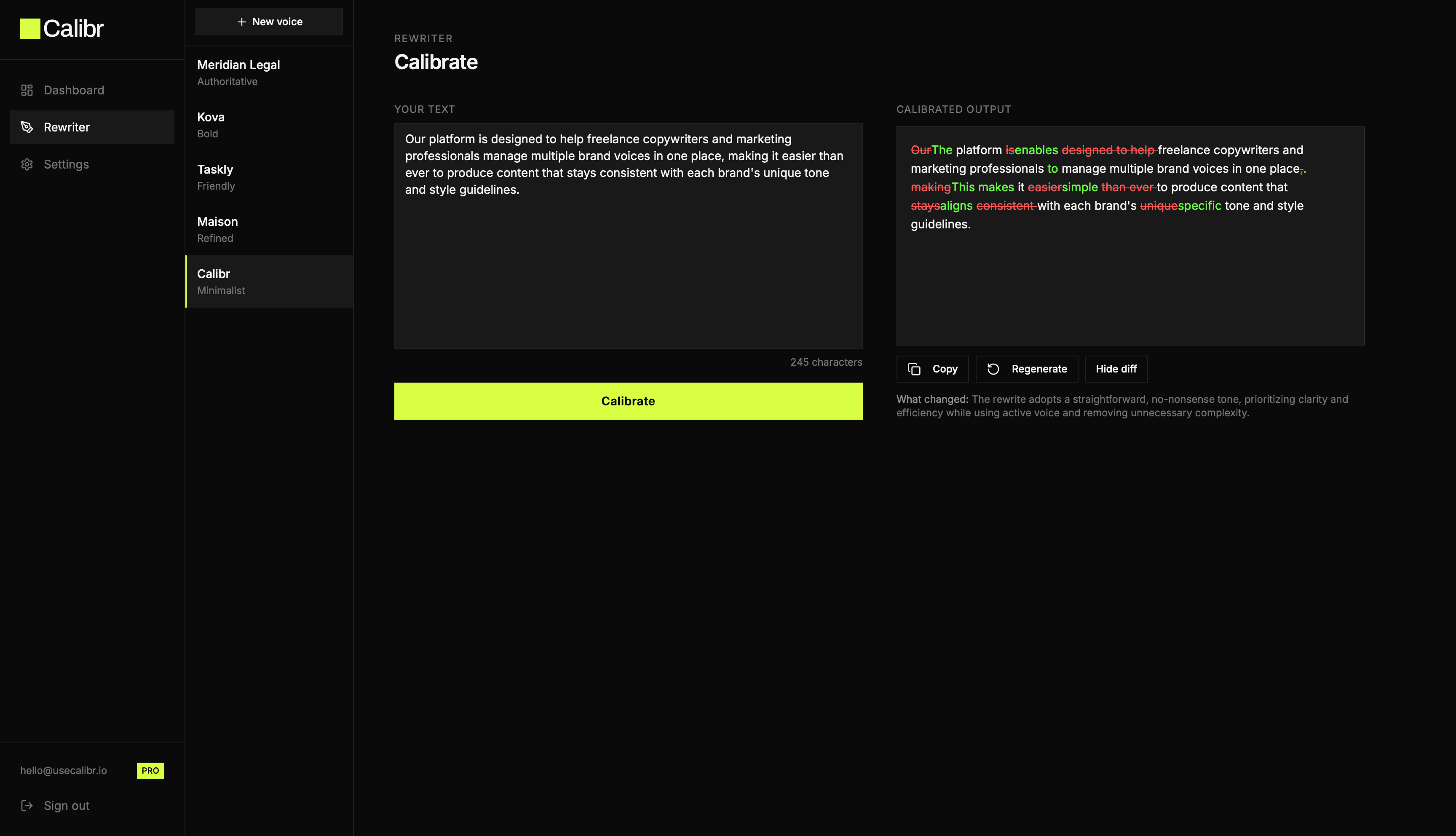
This is the gap Calibr is built to close — save your voice profile once, then apply it to any rewrite in under 10 seconds without having to retype the same context every time. If you've already read our breakdown of why AI copy doesn't sound like your brand, this is the underlying mechanism.
How to define both in one sitting
You can do this in about 90 minutes for a single brand. Use two separate documents.
Document one — Voice. Three to five adjectives. Real ones, not "professional." Then one paragraph for each adjective explaining what it looks like in writing and one short example. Then a "we sound like / we don't sound like" list with five entries on each side.
Document two — Tone. A grid. Rows = communication scenarios (launch announcement, error message, sales follow-up, support reply, social post). Columns = which dial you turn for each one (formal-casual, serious-playful, urgent-calm, warm-direct). Mark each cell. That is your tone system.
Voice belongs in the first doc. It never changes. Tone belongs in the second. It changes per row.
What this looks like in practice
Take a confident, plain-spoken B2B brand voice — say, a fintech tool for solo accountants. The voice stays the same across every channel: direct, jargon-free, mildly opinionated.
The tone shifts. A product launch reads punchy and assertive. A "your client missed their tax deadline" notification reads calm and procedural. A LinkedIn post about regulation reads informed and slightly wry. Three different tones, same recognizable voice underneath.
When a freelancer or agency hands this to ChatGPT with a prompt like "write in our brand voice, professional but friendly," the model has no way to make these distinctions. It produces one average tone for every situation — and that average is what readers experience as "AI-sounding."
SOUND LIKE YOURSELF. EVERY TIME.
Calibr rewrites any text to match your saved brand voice in seconds.
★★★★★ No credit card required
Benefits
Everything your brand voice needs
Instant rewrite
Under 10 seconds from paste to calibrated output
Precise voice matching
Trained on your actual copy, not generic prompts
Multiple profiles
Separate voice for every client or brand
Rewrite history
Every calibration saved and accessible
Regenerate
Not happy with the output? One click to try again
What changed
Plain English summary of every adjustment made
Conclusion
Brand voice is fixed. Tone of voice moves. Treating them as the same input is the most common reason AI-generated copy fails to land, and it is also the reason internal brand voice guidelines stop being used three months after launch.
Define them separately. Test them on real scenarios. And when you hand them to a tool, hand it a system that can hold both at once — not a single text field asking for a personality summary.
If you manage voice for one brand or twenty, save the profile once and stop describing it from scratch every time — try Calibr free, no credit card required →
How it works
How Calibr works
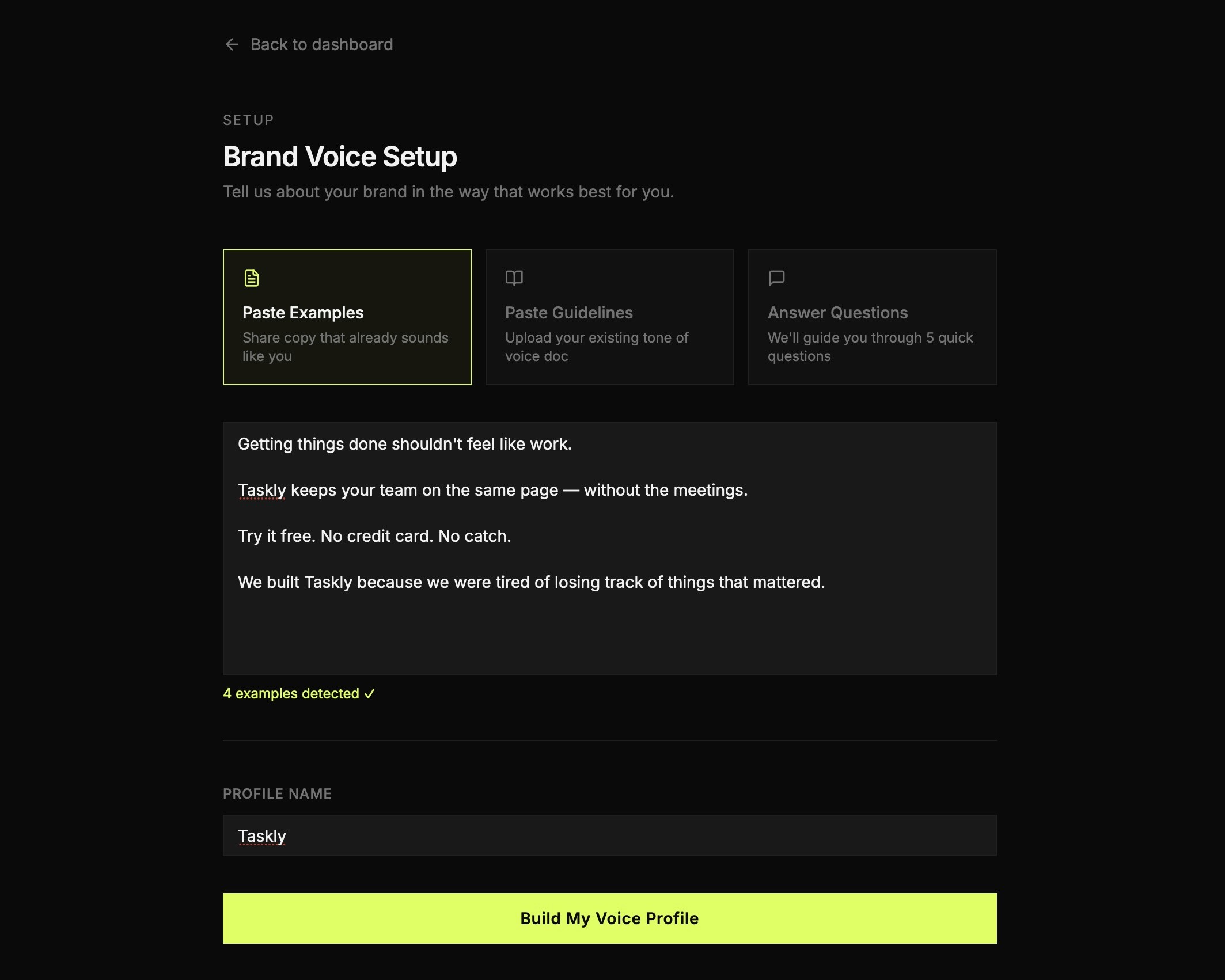
Step 1
Build your voice
Paste examples, upload guidelines, or answer five questions. Done in minutes.
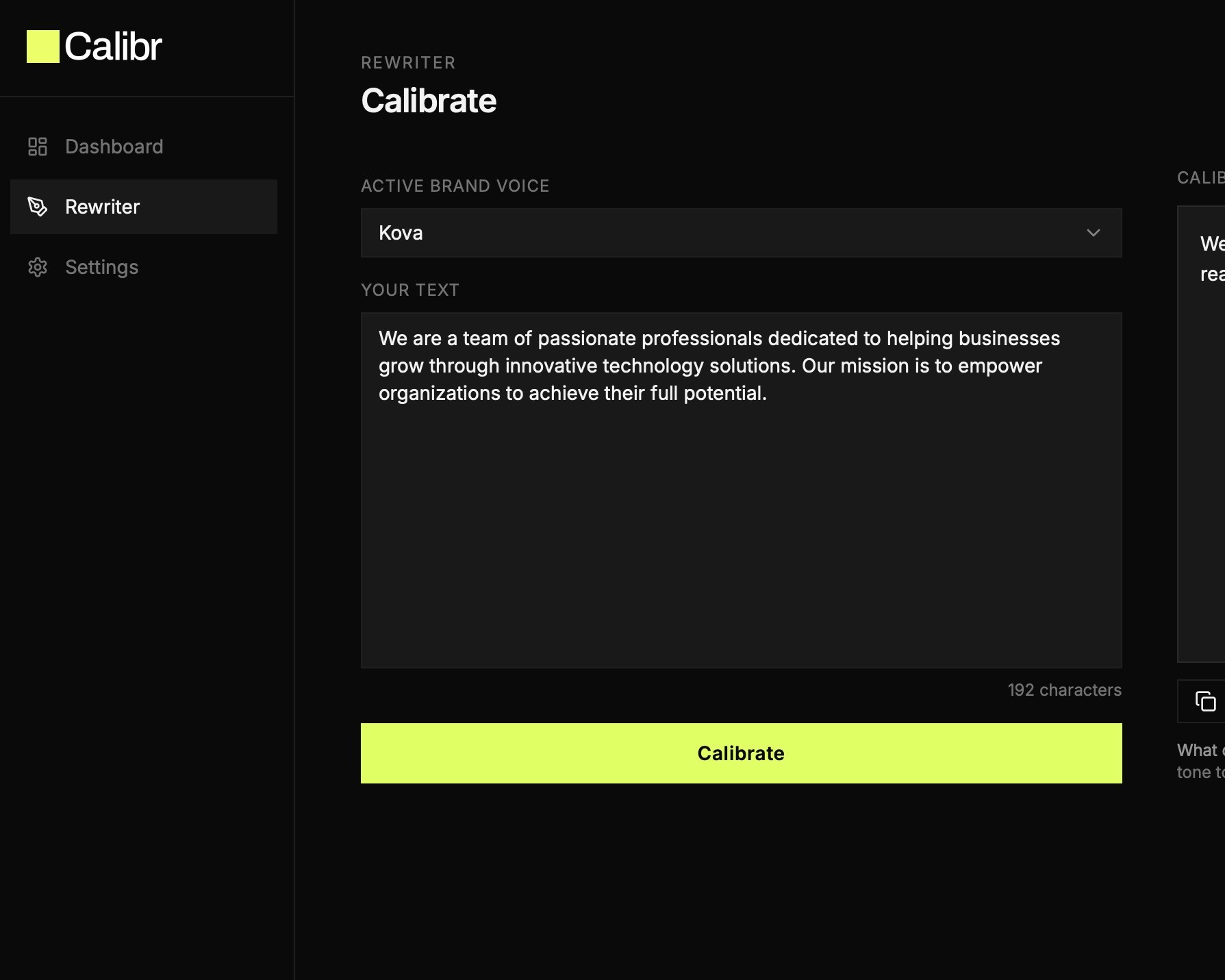
Step 2
Paste any text
AI output, a draft, vendor copy, anything that needs to sound like your brand.
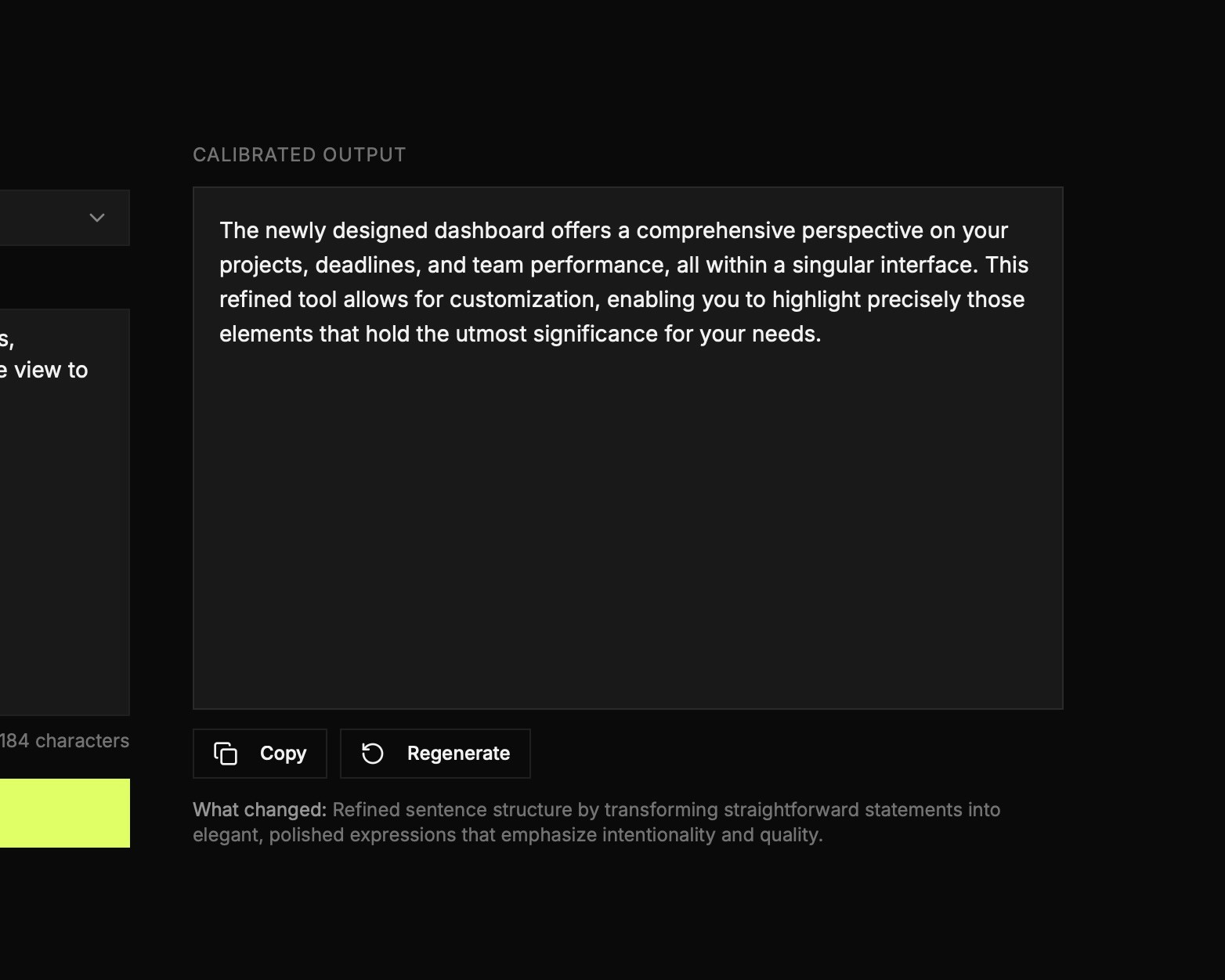
Step 3
Get calibrated copy
Your text, rewritten in your voice. Copy it and ship it.
Frequently Asked Questions (FAQ)
Is brand voice the same as tone of voice?
No. Brand voice is your fixed identity — the personality that runs through everything you write. Tone of voice is how that personality adjusts to a specific situation. A confident brand voice can have a playful tone on social and a serious tone in an apology email. The voice stays. The tone moves.
What is the difference between brand voice and tone of voice in one sentence?
Voice is who you are. Tone is how you sound right now. Voice is governed by principles you set once. Tone is governed by scenarios you adjust per situation.
How many tones can a single brand have?
Most brands operate with three to seven distinct tones, mapped to common scenarios — onboarding, support, sales, social, internal comms, and so on. More than seven gets hard to maintain. Fewer than three usually means you are treating tone like voice and missing situational fit.
Do AI writing tools understand the difference between brand voice and tone?
Most do not — they collapse both into a single prompt or settings panel. That is why AI output often sounds vaguely professional regardless of channel. Tools that separate voice from tone, or that let you save multiple tonal variations per brand, produce noticeably better results.
Can you have a strong brand voice without defined tone guidelines?
Yes, but you will lose consistency across channels. A team that knows the voice but not the tone framework will write a launch post and a churn email in the same register — which usually means one of them lands wrong. Define both or expect drift.