Why ChatGPT Writes Everything in the Same Voice (And What It Costs You)
TLDR
ChatGPT writes from the average of the internet. That is why your luxury skincare email and your no-code product launch sound suspiciously similar. The fix is not better prompts — it is feeding the model your actual writing instead of describing it.
You write a brief for a high-end interior design brand. You write a second brief for a SaaS pricing page. You hand both to ChatGPT.
What comes back reads like the same person wrote them. Slightly different topics, identical cadence. Helpful intro, three bullets, friendly transition, soft close. You know what AI writing sounds like because you have seen it 500 times this month.
This post explains why this happens at a technical level, the three giveaway patterns to watch for, and what actually changes when you stop describing your voice and start showing it.
ChatGPT writes from the average of the internet
Large language models are trained to predict the next most likely token given everything before it. "Likely" is the operative word. When the model does not know who you are or what you sound like, it defaults to the safest, most statistically common phrasing in its training data.
The training data is mostly internet content. The most common style on the internet is competent, mildly professional, vaguely friendly business writing. That is the baseline ChatGPT regresses to whenever you do not pin it down.
This is not a flaw in the model. It is what the model was built to do. Asking ChatGPT for "your brand voice" without showing it examples is like asking a session musician to play your band's signature sound without ever having heard a recording.
Why prompting "in our brand voice" doesn't fix it
The most common workaround is to add brand voice instructions to the prompt. "Write in our confident, warm, slightly irreverent voice." This rarely works, and when it does it is inconsistent run to run.
The problem is that adjectives are not behaviors. "Confident" maps to a hundred different writing styles. The model picks whichever interpretation is most statistically common — which means it picks the average of "confident" writing across the internet. That average is not your brand.
Even uploading a style guide partially fails. Style guides describe what you do. They rarely show enough examples for the model to internalize the pattern.
The three patterns that make AI copy recognizable
When you read enough ChatGPT output, you start to see the same fingerprints in everything.
Pattern one — symmetrical structure. Three bullets where one would do. Parallel sentence openings. "It's not just X, it's Y" framings. The model loves symmetry because symmetry is statistically common in well-edited writing.
Pattern two — adjective stacking. "Powerful, intuitive, easy-to-use." "Modern, sleek, professional." Two or three adjectives in a row where one specific one would land harder. This comes from the model hedging against being wrong.
Pattern three — soft-edge phrasing. "Often," "many," "can help you," "may consider." Probabilistic language that sounds reasonable but commits to nothing. Because the model is literally probabilistic, it speaks probabilistically by default.
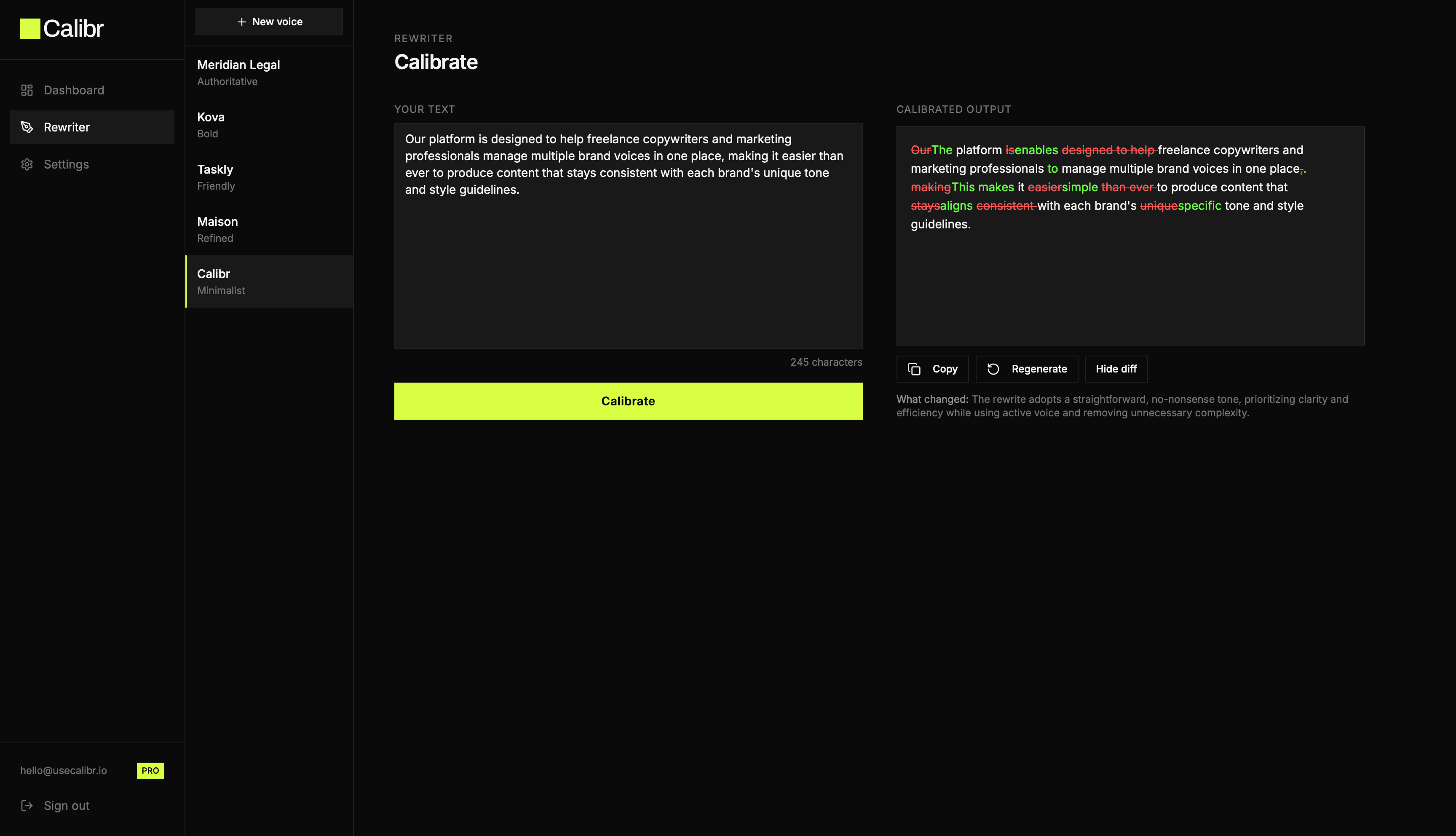
If you've ever wished you could paste AI output and have it come back actually sounding like your brand without rewriting half of it, that is the one thing Calibr does — it applies a saved voice profile to any text in under 10 seconds. Our post on the 5 signs your AI copy doesn't sound like your brand breaks down what to watch for line by line.
What actually fixes it — show, don't describe
The fix is structural, not a better prompt. You have to give the model enough of your real writing for it to model the pattern instead of the description.
In practice that means three to five pieces of polished copy that represent your voice across different contexts. A landing page, a product email, a social post, a longer-form post. The model uses these as the reference distribution for tone, cadence, word choice, and length patterns — not your adjectives.
This is why dedicated brand voice tools outperform raw ChatGPT for voice consistency. They are not better at writing. They are better at remembering what you sound like so you do not have to retype it into every prompt.
A 10-minute test you can run today
Pick a recent piece of your own writing — something you actually published and felt good about. Highlight it.
Now ask ChatGPT to write something new on a different topic "in the same voice as the example above." Compare the output to your original. Look for the three patterns above. Note how many you can spot in the AI version that are not in yours.
Then try the same thing with two examples. Then three. The output gets noticeably closer to your voice with each one. That is the entire principle behind every brand voice tool worth using — and it is also why setting one up takes 5 minutes, not 5 hours.
SOUND LIKE YOURSELF. EVERY TIME.
Calibr rewrites any text to match your saved brand voice in seconds.
★★★★★ No credit card required
Benefits
Everything your brand voice needs
Instant rewrite
Under 10 seconds from paste to calibrated output
Precise voice matching
Trained on your actual copy, not generic prompts
Multiple profiles
Separate voice for every client or brand
Rewrite history
Every calibration saved and accessible
Regenerate
Not happy with the output? One click to try again
What changed
Plain English summary of every adjustment made
Conclusion
ChatGPT writes everything in the same voice because the same voice is the statistically safest output when nothing else is specified. Better prompts narrow the band but do not break the pattern.
Showing the model your actual writing — not describing it — is what changes the output. The teams getting useful AI copy are the ones who treat voice as a saved input, not a per-prompt instruction.
The fix takes five minutes to set up and ten seconds per rewrite — start free with Calibr →
How it works
How Calibr works
Step 1
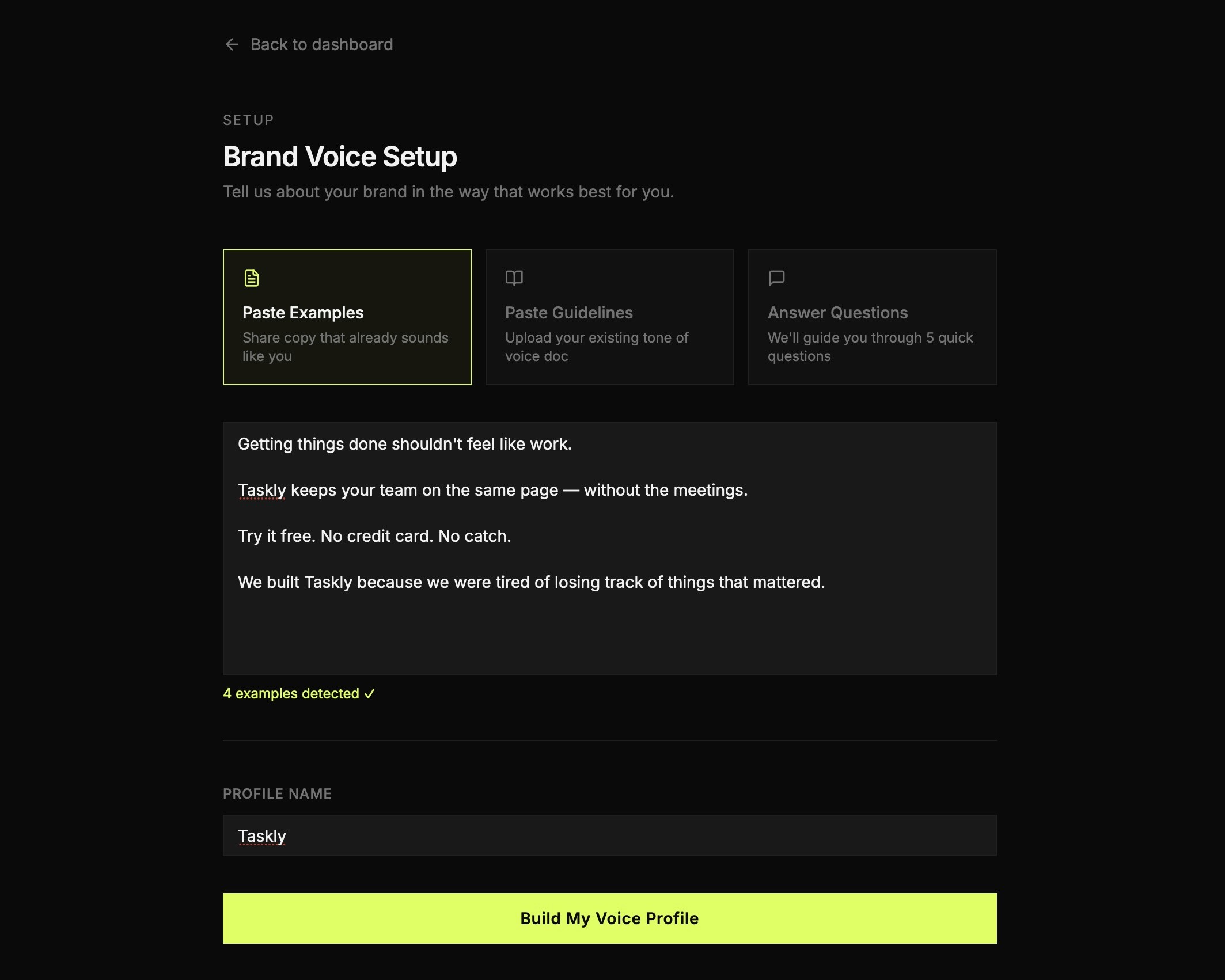
Build your voice
Paste examples, upload guidelines, or answer five questions. Done in minutes.
Step 2
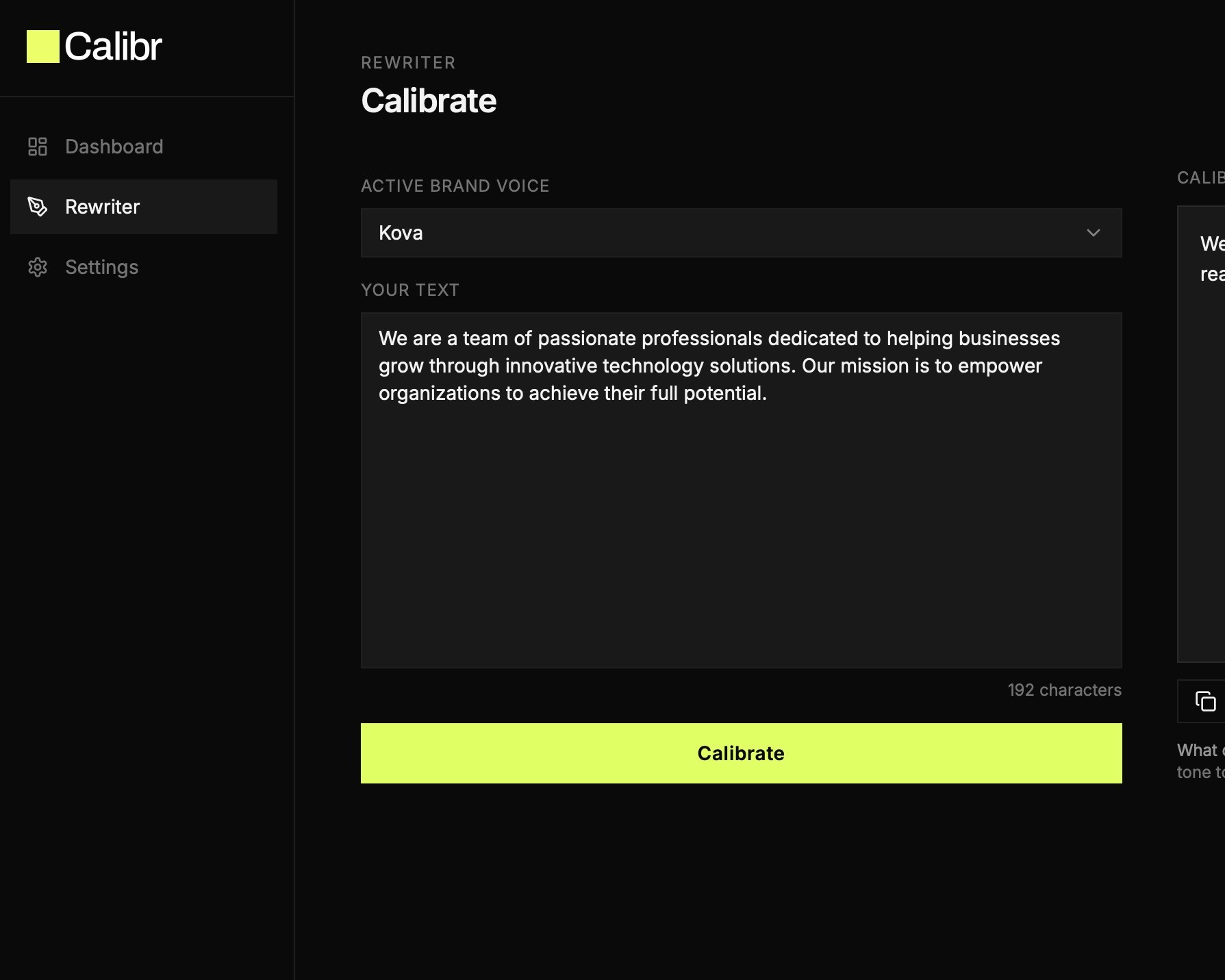
Paste any text
AI output, a draft, vendor copy, anything that needs to sound like your brand.
Step 3
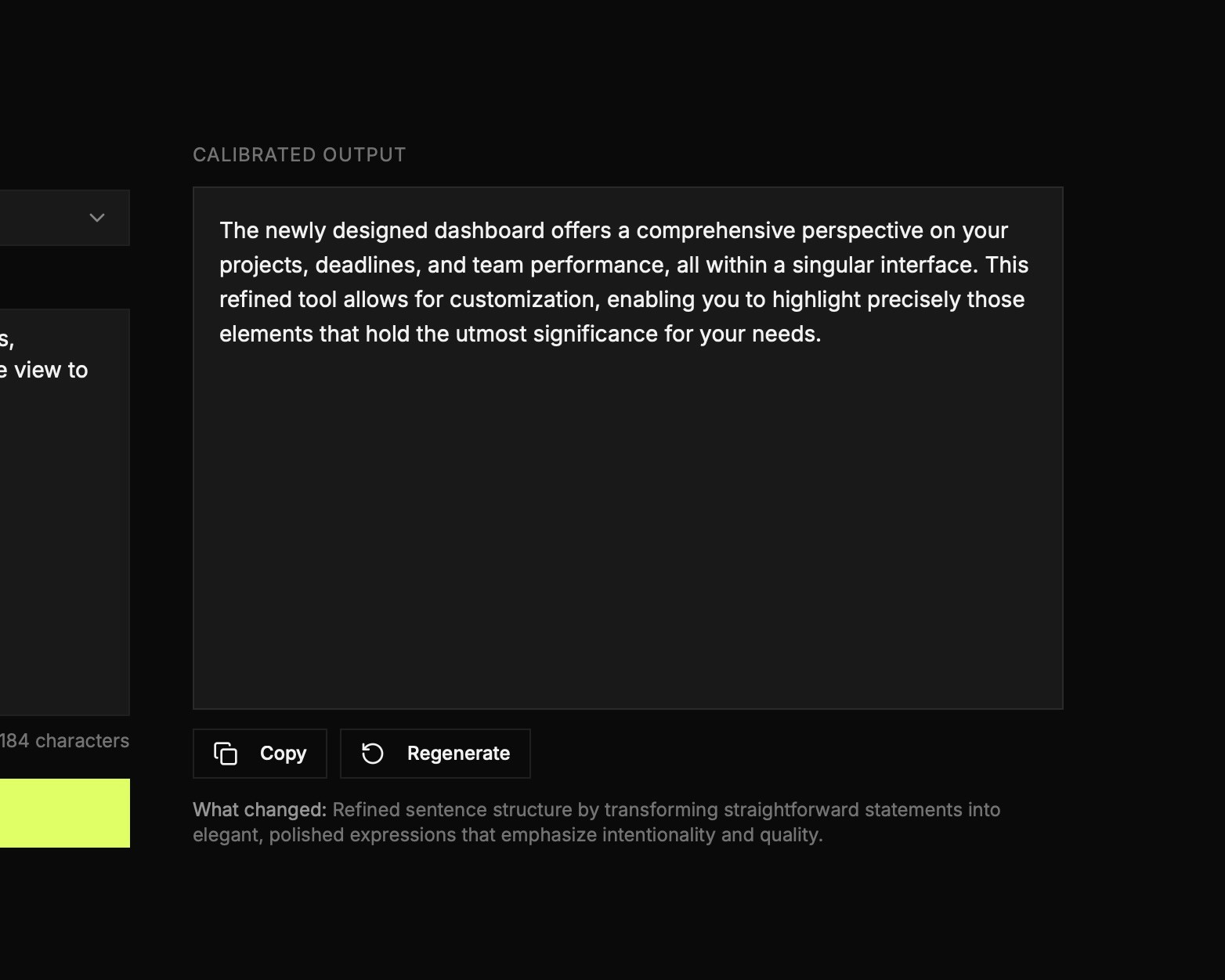
Get calibrated copy
Your text, rewritten in your voice. Copy it and ship it.
Frequently Asked Questions (FAQ)
Why does ChatGPT write everything in the same voice?
Because the model defaults to the most statistically likely phrasing in its training data when you do not give it specific reference material. That default happens to be polite, mildly professional, vaguely friendly business writing — which is the most common style on the internet and the style most ChatGPT output reverts to.
A better prompt helps, but only to a point. Describing voice in adjectives ("confident, warm, slightly irreverent") gives the model latitude to pick the most common interpretation of those adjectives. Showing it three to five real examples of your writing gets closer to a true match.
Will GPT-5 or newer models fix the same-voice problem?
Newer models follow instructions better and produce smoother prose, but the underlying training-data-average issue is the same. Without examples of your specific voice, every general-purpose LLM regresses to a similar default. The fix is structural — saved voice profiles trained on your actual writing — not a model upgrade.
How many writing samples does an AI need to learn my brand voice?
How many writing samples does an AI need to learn my brand voice?
Three to five strong examples is usually enough to see meaningful improvement. Below three, the model does not have a clear pattern to anchor on. Above ten, returns diminish quickly. Quality of the samples matters more than quantity — pick polished work that genuinely represents the voice.
Is there a way to make ChatGPT remember my brand voice permanently?
ChatGPT's custom instructions and memory features help inside one account, but they do not transfer well across clients or projects, and they have to be redescribed in text. Tools built specifically for brand voice save the profile once and apply it on demand, which is why agencies managing multiple brands tend to use them instead of stretching ChatGPT to do the job.