How to Audit Your Brand Voice in 30 Minutes (No Workshop Required)
TLDR
A brand voice audit checks whether your last 90 days of published content still sounds like the voice you defined. You can do it in 30 minutes if you skip the workshop fluff. Pull 10 pieces, score against three dimensions, find the drift patterns, fix the loudest one in the next sprint.
Your last six blog posts sound nothing like your homepage. You can tell. You're not entirely sure why.
This is what voice drift looks like in practice — a slow, post-by-post erosion where each piece sounded fine on its own but the body of work no longer reads like the brand you described in the style guide. Most teams notice it months after it started. Most teams also assume fixing it requires a brand consultant and a two-week engagement.
It doesn't. A working brand voice audit takes about 30 minutes and gives you everything you need to course-correct.
Why brand voice drifts (and why audits catch it)
Voice drift happens for boring reasons. A new writer joins. A client gives feedback that nudges the tone formal. An AI tool gets added to the workflow. Each shift is small. None of them feel wrong on the day.
Six months later you have 40 pieces of content where 30 of them sound subtly different from the voice you defined. Nobody made a decision to change the voice. The voice changed anyway.
An audit catches drift because it forces you to look at content in batches instead of one piece at a time. A single off-voice email is invisible. Ten of them lined up reveal the pattern.
The 30-minute brand voice audit, step by step
The audit has three blocks: pull, score, diagnose.
Pull (5 minutes). Open the last 90 days of your published content. Pick 10 pieces across formats — 3 blog posts or longer articles, 3 social posts, 2 customer emails, 2 landing page sections or product copy. Mixed channels matter. Voice that holds on long-form often collapses in short-form, and vice versa.
Score (15 minutes). For each piece, score it 1-5 on three dimensions of your brand voice. Use the three adjectives from your voice doc — direct, warm, irreverent, whatever you defined. If a piece is a 5, it nails that dimension. If it's a 1, it reads like it could belong to any brand. Don't overthink. The first instinct is usually right.
Diagnose (10 minutes). Look at the scores in aggregate. Which dimension scores lowest? Which channel scores lowest? Which writer or AI workflow produced the lowest-scoring pieces? You're not looking for one bad piece. You're looking for a pattern.
The three patterns to watch for in your scoring
Most voice drift falls into one of three recognizable patterns. Naming the pattern is the entire diagnostic value of the audit.
Pattern one — channel drift. Voice holds on the website but collapses on social, or vice versa. The team writing for one channel internalized the voice. The team writing for the other did not.
Pattern two — length drift. Voice holds in short pieces but flattens in longer ones (or the opposite). Usually a sign that the writer or AI tool is reverting to a default for one of the two lengths.
Pattern three — topic drift. Voice holds on familiar topics but breaks when the content moves into a new product area, a new audience, or a new format. The voice was defined for the brand at one stage and never updated for what you write about now.
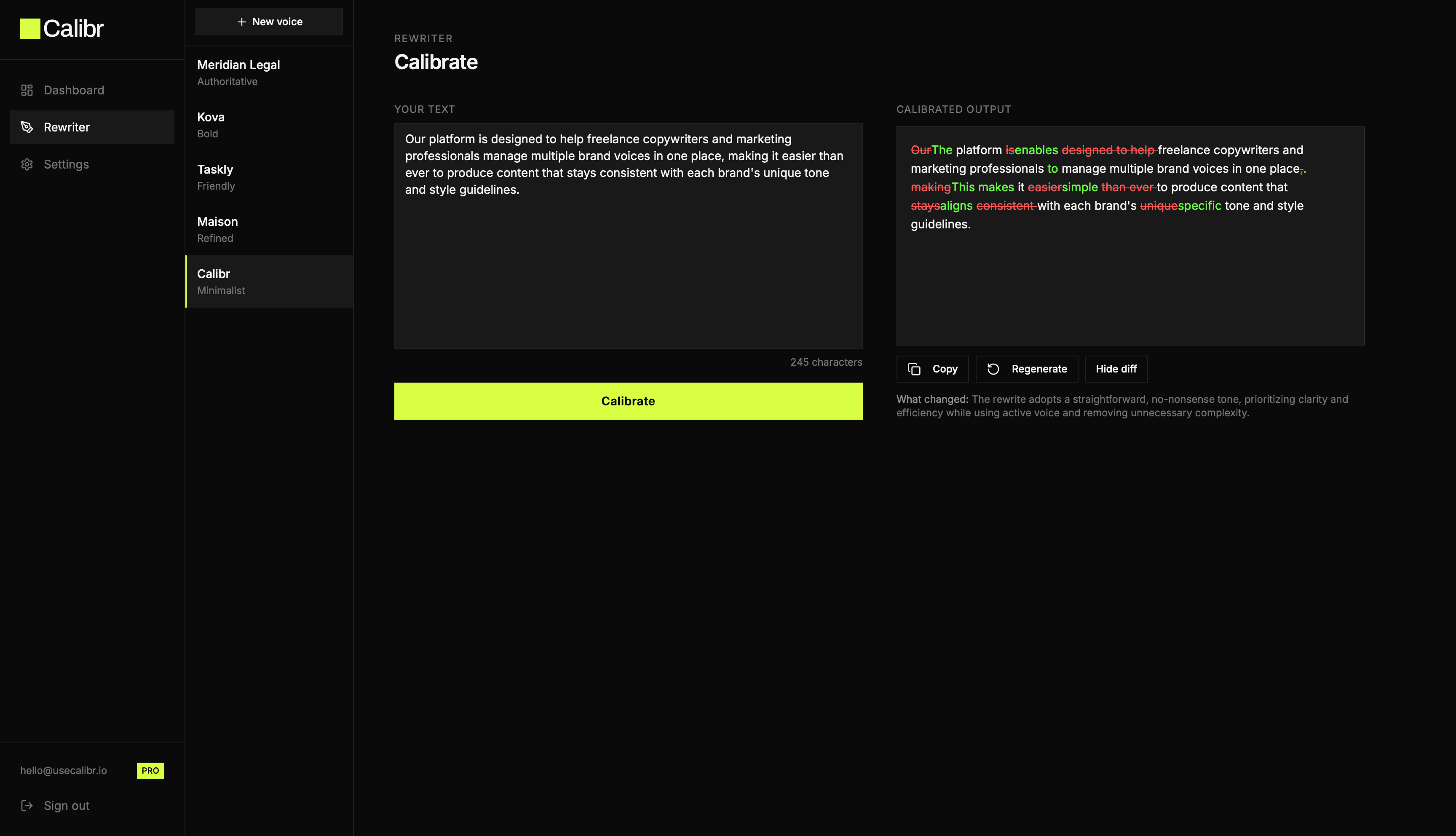
If you'd rather run this audit across five clients without burning half a day per brand, this is exactly the gap Calibr fills — saved voice profiles you can re-check any draft against in seconds, with the rewrite history showing exactly where you drifted. The pattern work here pairs with the diagnostic in our post on the 5 signs your AI copy doesn't sound like your brand.
Where audits go wrong (and how to make yours stick)
Most audits produce a 14-page deck nobody opens again. Yours should produce one paragraph and one action.
The paragraph names the loudest drift pattern in plain language. "Our long-form blog posts have lost the dry humor that's central to the voice — they read more corporate than the social copy or the homepage." That sentence is the audit deliverable. Everything else is supporting evidence.
The action is the single change you'll make in the next two weeks. Not five changes. One. Audits that produce a 15-item action plan get ignored. Audits that produce one specific change tend to actually happen.
Then schedule the next audit. Not the next steering committee. The next audit.
How often to repeat this
Quarterly is the right cadence for most brands. Monthly is too frequent — voice doesn't drift fast enough to need that level of scrutiny, and you'll either burn out or stop taking it seriously. Annually is too rare — by the time you catch drift, six months of content already shipped off-voice.
Put it on the calendar. Same person every quarter, same scoring rubric, same channel mix. Audits that compare against the same baseline catch drift that one-off audits miss.
SOUND LIKE YOURSELF. EVERY TIME.
Calibr rewrites any text to match your saved brand voice in seconds.
★★★★★ No credit card required
Benefits
Everything your brand voice needs
Instant rewrite
Under 10 seconds from paste to calibrated output
Precise voice matching
Trained on your actual copy, not generic prompts
Multiple profiles
Separate voice for every client or brand
Rewrite history
Every calibration saved and accessible
Regenerate
Not happy with the output? One click to try again
What changed
Plain English summary of every adjustment made
Conclusion
A brand voice audit is not a project. It's a recurring practice that takes 30 minutes and produces one paragraph and one action. The teams whose voices stay sharp over years are the ones doing the small, repeated version of this — not the ones running a major brand voice review every other year.
Pull 10 pieces. Score them on three dimensions. Find the loudest pattern. Fix one thing. Repeat in 90 days.
If you'd rather check a draft against your voice in 30 seconds instead of 30 minutes, open a free Calibr account →
How it works
How Calibr works
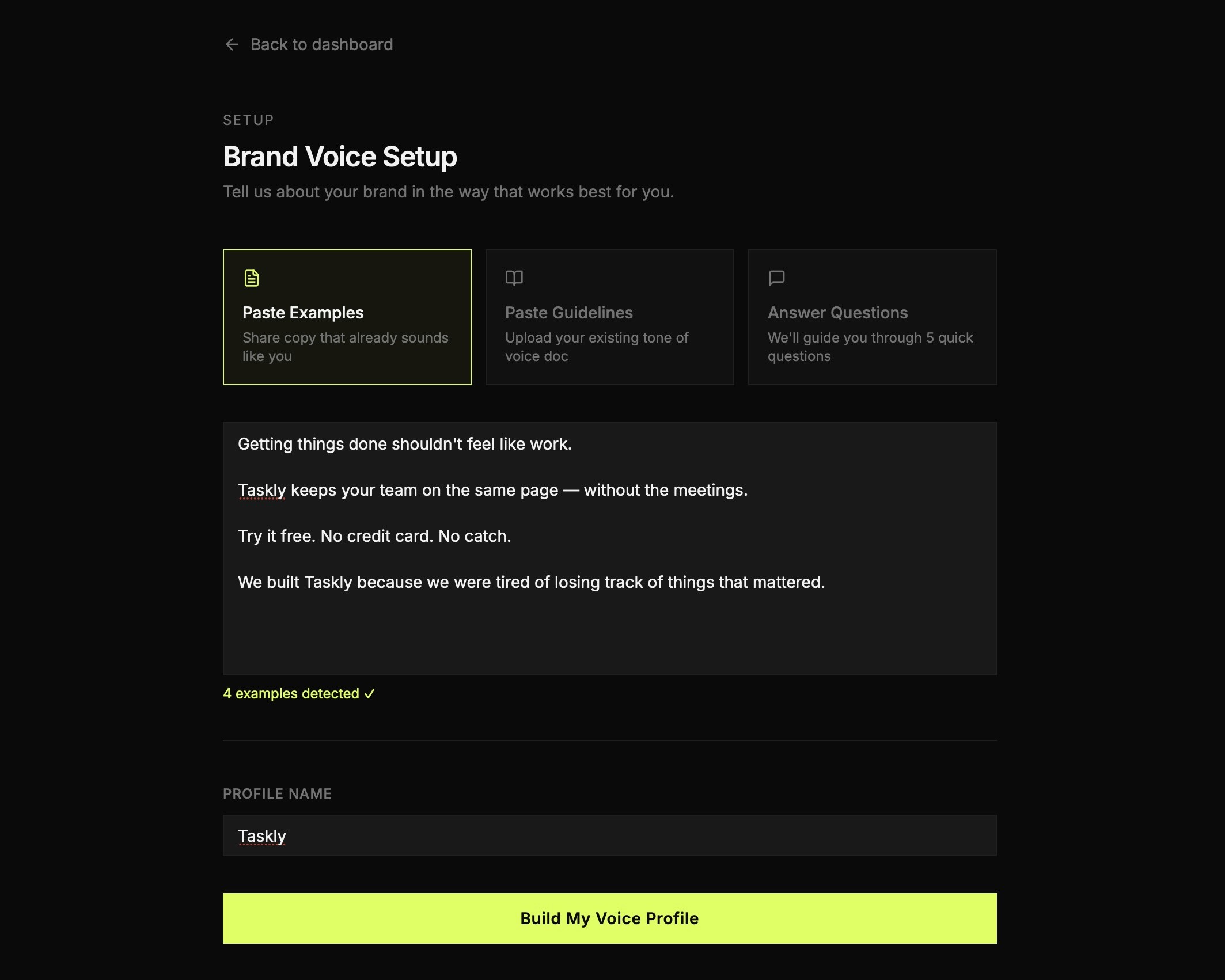
Step 1
Build your voice
Paste examples, upload guidelines, or answer five questions. Done in minutes.
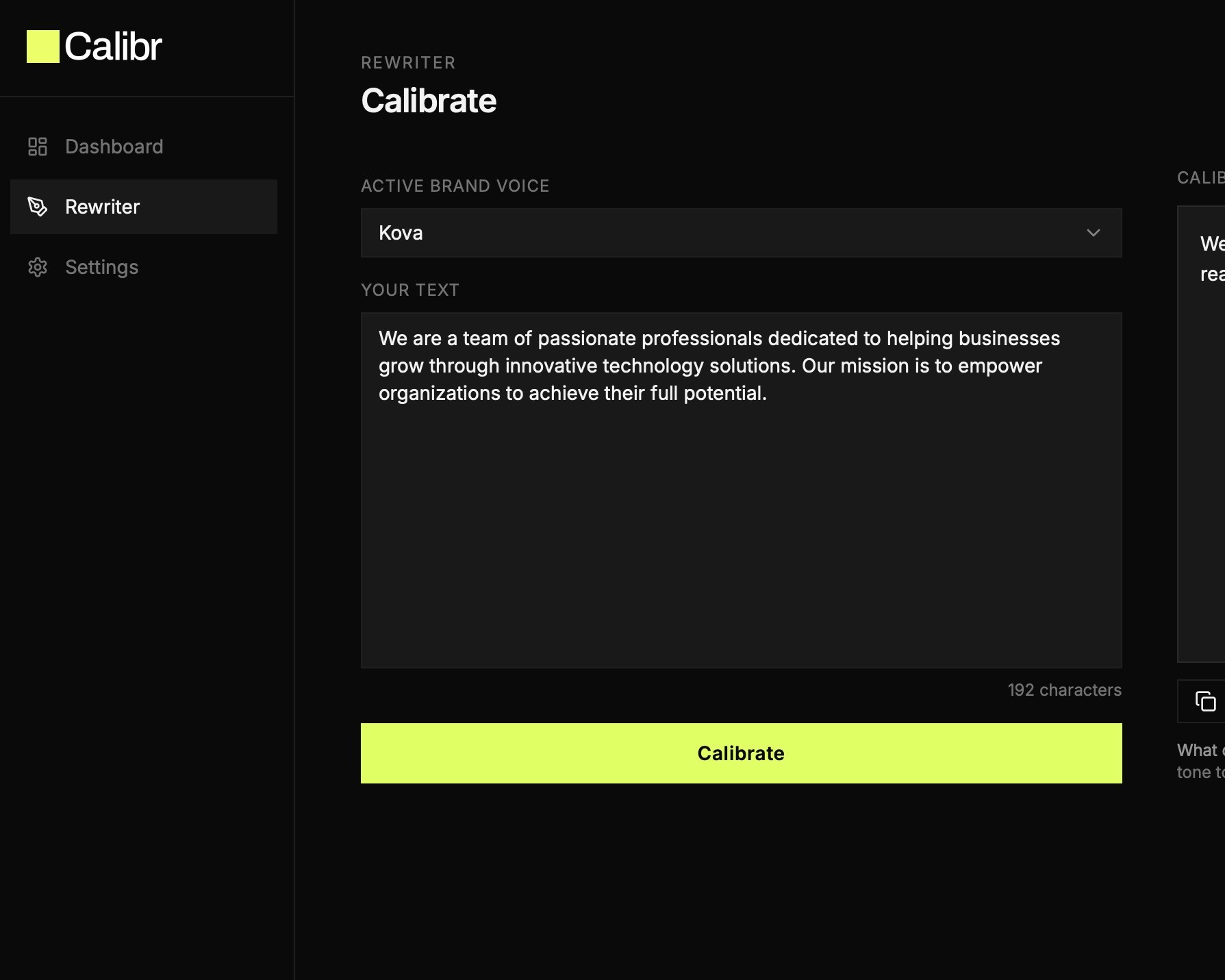
Step 2
Paste any text
AI output, a draft, vendor copy, anything that needs to sound like your brand.
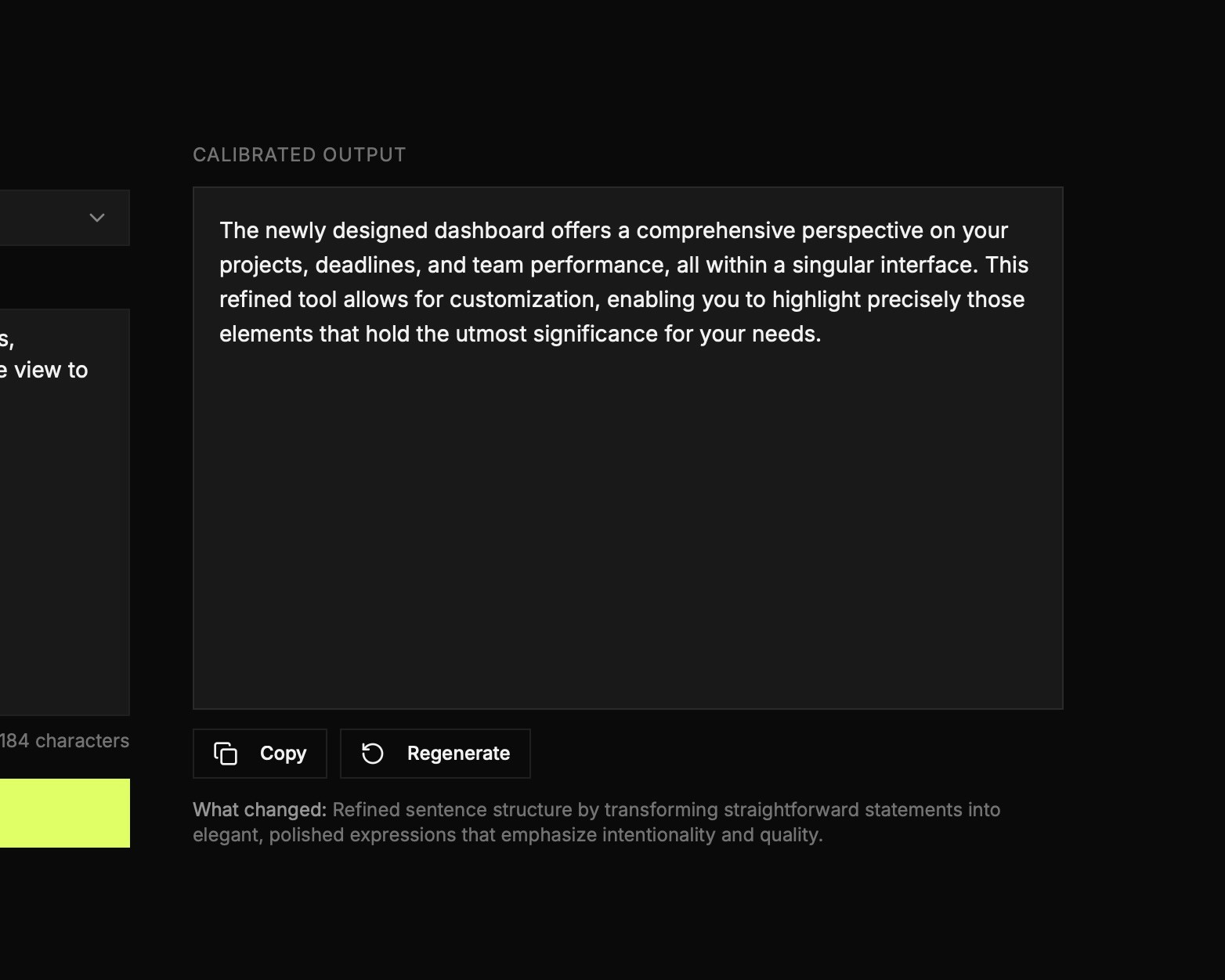
Step 3
Get calibrated copy
Your text, rewritten in your voice. Copy it and ship it.
Frequently Asked Questions (FAQ)
What is a brand voice audit?
A brand voice audit is a structured review of recent published content to check whether it still matches the brand voice you defined. The output is a paragraph naming the biggest drift pattern and one specific action to correct it. It is not a rebrand or a workshop — it's a recurring check-in.
How often should I run a brand voice audit?
Quarterly is the right cadence for most brands. Voice doesn't drift fast enough to need monthly scrutiny, and waiting a full year means six months of off-voice content has already shipped before you catch it. Put it on the calendar with the same scoring rubric each time so audits compare against a stable baseline.
Can you do a brand voice audit in under an hour?
Yes, and you should — long audits tend to produce decks nobody reads. A 30-minute version breaks into 5 minutes of pulling content, 15 minutes of scoring against three voice dimensions, and 10 minutes of diagnosing the loudest drift pattern. The shorter format is more likely to repeat.
What do you actually score during a brand voice audit?
Score each piece 1-5 on the three adjectives from your brand voice document — whatever you defined as the core dimensions. A 5 means the piece nails that dimension; a 1 means it reads like it could belong to any brand. The scores reveal which dimension is drifting, which channel is drifting, and which writer or workflow is responsible.
Do AI tools help or hurt brand voice consistency between audits?
Both, depending on setup. AI tools used without a saved voice profile speed up drift because each draft regresses to the model's default. Tools that hold a saved voice profile actively reduce drift because they apply the same voice every time. The audit will tell you which side your current workflow lands on.